Future Of Work
Which Jobs Are Being Automated — And Which Are Safe
8 min read · March 15, 2026
Automation eats predictable work. Physical unpredictability and human trust remain expensive.
The pattern behind the disruption
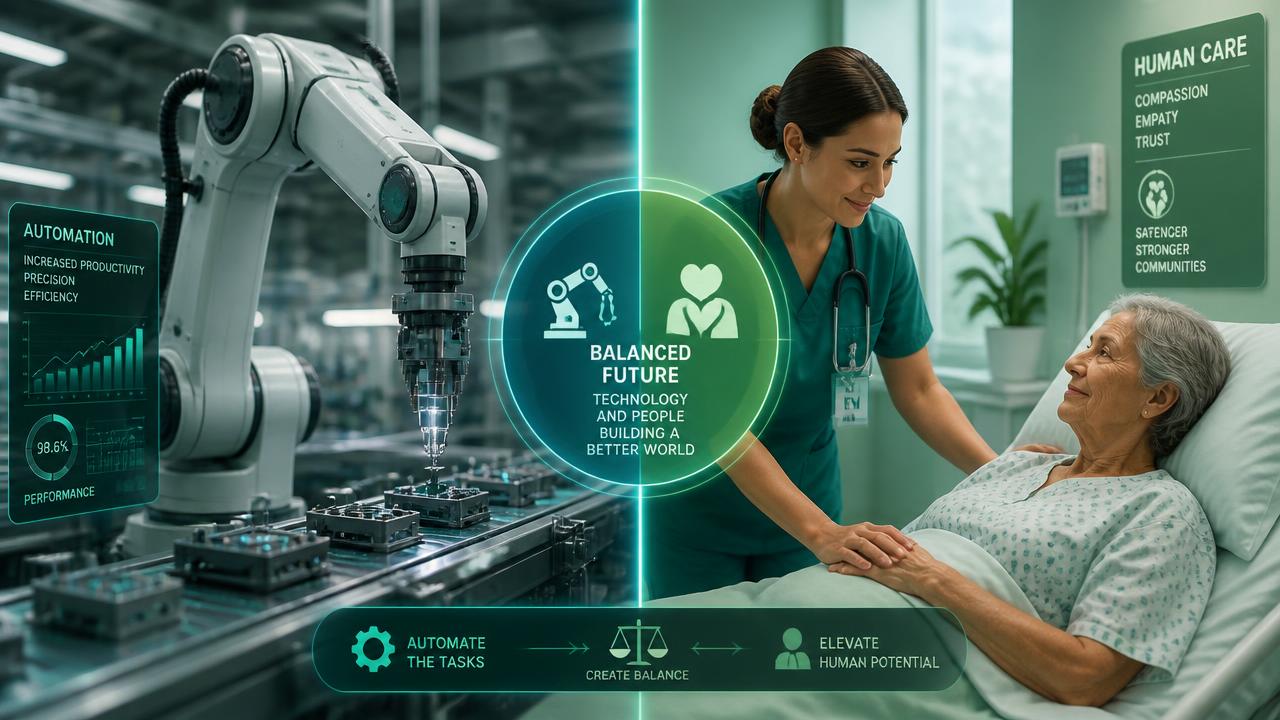
Automation targets tasks that are repetitive, rule-based and performed in a controlled environment. Data entry, basic bookkeeping, routine document review, first-line customer contact and standardised production steps all fit that description, which is why they have been shrinking for a decade and are shrinking faster now.
What resists automation is unpredictable physical work in uncontrolled spaces, and work where a human being must carry responsibility. A plumber crawling under a house, a nurse assessing a deteriorating patient and a site supervisor making a safety call are all doing things that are hard to specify in advance and expensive to get wrong.
The nuance for knowledge work
Knowledge roles are not uniformly at risk. The junior end — summarising, drafting, first-pass analysis — is being compressed hardest, while senior judgement, client relationships and accountability become more valuable. That creates a real problem: the training ground for seniors is exactly the junior work being automated, so entering these fields now means deliberately seeking exposure to decisions rather than volume.

How to position yourself
Combine a resistant core with automation fluency. A tradesperson who can quote, schedule and market digitally is worth more than one who cannot. An accountant who automates reconciliation and spends the saved time advising clients is worth more than one who resists. The threat is not the technology; it is being the person who only does the part the technology now does.