LOW QUALIFICATION JOBS THAT PAY A LOT OF MONEY
Which Job Pays The Most With No Education Or Training?
12 min read · August 13, 2026
The Job Roles that Pay the Highest Wages when you have No Degree, No Trade and No Training
Sales, Manual Labor and Remote Work
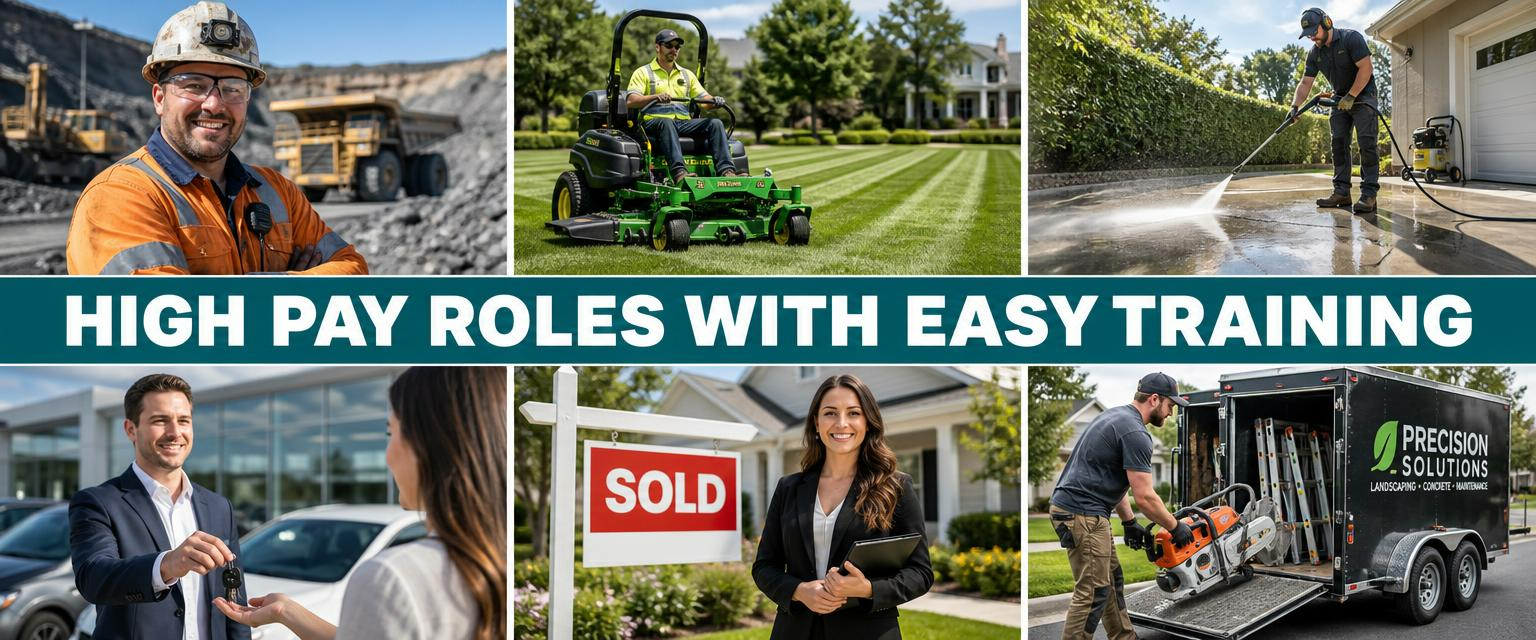
If you Want the "Highest Paying Job Available with No Education" and no training then look for Roles in Sales or Manual Laboring. For the Highest Guaranteed Wage Starting almost Immediately then remote work in country side and outside of major cities is the answer. Mostly consisting of Manual Labor Hand in Mining and Resources Sector and Heavy Industry Machine Operator such as Truck Driver or Loader Operator. This Mine-Site Work, Offshore Drilling Oil Rigs and Infrastructure Construction roles. You may need just some minor Training and Induction for entry as Safety Induction and Medical are often required. Long Work Rosters and Remoteness with overtime make Big Wages.
For the Highest Possible Income with no upper limit then "Commission Sales" is the Answer .. think Jobs like Real Estate Salesman and High-Value Product Sales like Luxury Cars. If you don't have much training, qualifications, skills or Schooling, but you know how to Talk and can follow Sales-Based Approach guidelines and on-the-job Training and As-you-go Experience, then SALES ROLES are Absolutely King when it comes to earning A LOT OF MONEY with little to no training or experience. If you don't have a College Degree, University Diploma or Trade Certificate, then Sales is your Best Bet for High Income with no pre-requisites.. Nothing else on the No-Qualification List can produce the numbers a strong Sales Agent or Dealer Principal makes because Sales Commission is based on earning "A Percentage Commission" of a very Large Transaction Amount and the Math Makes you Rich!
Everything else worth doing sits between those two Roles: Guaranteed but Capped, or Uncapped but Uncertain. Which is right for you depends almost entirely on whether you can tolerate a variable income while you build.
Mining and Resources = Remote Work in Heavy Industry $100K or more
Iron Ore, Gold and Lithium Mine Sites, Gas plants, Offshore facilities and Large Civil Projects frequently hire unqualified people because the work is remote, the rosters are hard and turnover is high. Trade assistants, drill offsiders, washdown crews, process operators, camp maintenance and general labor hands all start with no prior industry experience.
The Wage Pay is built from Layers: Base Rate, Site or Region Allowance, Shift Loading for nights, Overtime for hours beyond the roster, and Accommodation, Meals and Flights supplied. Because living costs are covered while on site, the Savings Rate available to a disciplined worker is Far Higher than the headline wage suggests.
What you actually need is short and practical: Driver's License, a General Construction Induction White Card, engage in Pre-employment Medical and Drug and Alcohol Screen. Everything else, such as Confined space, Working at heights, EWP Elevated Work Platform, Forklift Certificate or Dogging Rigging Course is just 1-5 Days and employers frequently pay for them once you are on the books. These are the Easiest to Start and offer Consistent Long-Term High Wages
Sales Commission = Luxury Car Sales and Real Estate Salesman
Real Estate is the Highest Paid Work with No-Degree followed by Luxury Car Selling. All you need is short registration course, then work under an agency. Income is a share of the commission on each sale, so a handful of transactions a month places an agent in a bracket most salaried professionals never reach. Property Management is another option and offers Steady Monthly Income with far less uncertainty.
Luxury Vehicles, Mining and Industrial Machinery, High Value Boats and Marine along with Caravan Sales work the same way with easier entry because No License is required at all in most places. Just an ability to Chat and Sweet Talk clients into Buying is all you need to be good at. Solar Energy and Telecommunications B2B Services also Pay High.
In every Industry the employer provide On-Job Training for Product Knowledge and Education These Roles usually work on a Retainer while you Learn Basis with Commission Percentage Rate for Sales Results and this usually Escalates with Volume. A Couple Good Sales a Week of $100,000 Vehicles at 5% Commission can earn you $5000 per vehicle Sold and you can easily see how this can add up to $20,000 a month or more, easily!
Trades and Manual Labor = High Pay over $80,000
You do not need an Apprenticeship or Trade Certificate to work alongside one. Manual "Laborers" Concreting crews, Demolition, Scaffolding, Roof tiling, Formwork, Asbestos Removal, Rigging Assistance, Removalists and Tower Crane dogmen all pay well above general wage levels for physical capability and reliability, with tickets measured in days.
This Sector has a Hidden Advantage: "The shortest path to a Licensed Trade" if you later decide you want to obtain full Certification. Employers Hire Apprentices from the Labor hands who already turn up on time and understand the site. You are "Paid to Audition" for a Career that would otherwise take a competitive application.
Traffic Control deserves its own mention. A short ticket, High Hourly Rates, and almost all the work occurring at night or on weekends when road closures happen. This means "Out-of-Regular Hours" which applies Wage Loadings, and Double Time Calculations on top of an already decent base for work that is not physically punishing.
Self-Employment and Businesses earning $100,000 + A Year
Lawn Mowing rounds, Pressure Washing, Window Cleaning, Gutter Clearing, Rubbish Removal, House Washing, Car Detailing, End-of-Lease Cleaning and Handyman Work all require NO QUALIFICATIONS and only modest costs for Equipment. What they require instead is the willingness to Work, Invoice Payment and Sales Market yourself.
The income depends almost entirely on structure. Cluster your customers geographically so you are working rather than driving. Price per job, not per hour, so getting faster increases your rate. Put every customer on a repeating cycle so next month's income is already booked. Add adjacent services such as additional cleaning or maintenance and yearly Inspections options, to existing customers rather than constantly hunting new ones.
Done this way, a Solo Business Operator commonly Nets well over $100,000 Per Annun in USA at or above a Qualified Trade Rate, without having to pay and spend 3 years at school. Additionally the Business becomes an asset with resale value. Mowing Rounds and Cleaning Lists are bought and sold routinely on a multiple of their recurring revenue.
Ride-Share, Food Delivery and Couriers at Peak Times
Rideshare such as UBER, DIDI and OLA or Food Delivery Companies like UBER EATS, DOOR-DASH, DELIVEROO and many more "Work when you have Time" Casual App Employment Opportunities frequently pay Peak and Over-Time Style Rates when working at the Busiest Times, such as early morning Work and School Runs, and Late Evening Pubs and Bars Drive Homes. The UBER EATS Business is Busiest at Evenings and weekends when most people want food but don't want to leave the house for it. The Parcel Delivery side hustles with AMAZON Deliver can frequently pay over $2000 a Week in Peak Times, like Christmas and Easter Holiday Peak Parcel Delivery Seasons. There are also options like On-Demand Courier Work which require a vehicle and a background check, nothing more. Averaged across all hours the pay is Exceptional. Concentrated into the Right Hours it is Genuinely Very Strong.
Peak windows are Weekday Mornings and Afternoons to and from work or school drop-offs. Friday Nights and Saturday's along with Airport Arrival Peaks, Stadium and Concerts, Public Holidays and even weather based Rain can all make Surge pricing. Completion Quests and Streak Bonuses stack in those windows. Drivers who work exclusively at peak and refuse to sit idle at flat rates report far higher effective hourly earnings than full-time casual drivers.
Be ruthless about the true cost. Deduct fuel or charging, insurance, servicing, tires, cleaning, commission and depreciation before calling it income. If the vehicle is efficient and the hours are chosen well, it is a strong flexible earner that "Works Around Your Lifestyle" rather than the other way around, an easy way to "Be your Own Boss"

What High Paying Job Role is "BEST FOR YOU" ?
Without a Doubt Mining, Heavy Industry and Resources Work Pays the MOST Reliably and FASTEST .. If you want QUICK FAST MONEY Remote Work in Mining is the way to go. The Trade-offs are it Costs you Time Away from Home. The Rosters are Difficult, with Long Hours and Physical Wear in terms of often time Heavy Labor on the body. So it's no easy feat. However you will get paid HUGE MONEY Very Quickly, so if this is your goal, then Mining is hard to beat. Best suited for someone in their twenties without Dependents who wants to build capital in three to five years.
The Second "BEST JOB ROLE FOR HIGH PAY" is Sales Commission Work! Retail and Commercial Selling of Real Estate, Automobiles, Farm Machinery, Solar Energy Panels and Batteries is the Most Pay in absolute terms. If you are Good at Talking and Naturally Good at Selling this is a Great Role for High Pay and least Education or Training to get started.
Self-Employment and Owner Business Pays Well and compounds into a Saleable Asset. The downside is it can take a couple Months to Build a Client Base and consistent Work/Bookings. It sometimes cost you in Time and Effort for Quoting, Invoicing, Insurance, Tax and Marketing but its worth if for the High Pay and Life Flexibility of working the hours and days that suit your lifestyle and time schedule with family etc..
How to start in the next thirty days
For resources: get a driver's licence and a construction induction card, book a medical, then apply directly to labour hire firms that service the sites rather than to the mining companies themselves. Labour hire is the front door, and almost everyone on site started there.
For sales: apply to three or four dealerships or agencies in the same week and compare retainers and commission structures. Ask to spend a Saturday observing before committing. Attitude and energy in that first conversation matter more than anything on your resume.
For self-employment: buy the minimum viable equipment second-hand, register a business name and insurance, then get your first ten customers within walking distance of each other. Do not scale the marketing until the route makes sense geographically. For gig work: sign up, then work only the peak windows for a month and measure your true cost per kilometre before deciding whether to continue.
The mistakes that keep people on low pay
The first mistake is taking the easiest available job rather than the best paying one. Retail and hospitality hire fastest, which is exactly why they pay least — there is no scarcity in a role anyone can fill on a day's notice. The roles in this article pay more precisely because most people will not do them.
The second is refusing the unsociable hours. Nights, weekends, remote swings and peak windows are where the loadings, multipliers and bonuses sit. A worker who only accepts standard daytime hours has voluntarily removed the entire premium from the equation.
The third is staying an employee forever in work that is trivially easy to own. Mowing, cleaning, washing, detailing and removals all have negligible barriers to ownership. Working as a hand in those industries for a decade while never buying a trailer is the most expensive loyalty in the labour market.
The verdict
If you want the highest wage with no education or training and you can travel, take remote resources or heavy industry labour — it is the fastest route from nothing to a high, reliable annual income, and it funds everything that comes after.
If you want the highest income and can survive a lean first year, take commission sales, and take it in the highest-value product you can get hired to sell. Property first, then vehicles, machinery and capital equipment.
If you want control over your time and an asset at the end of it, start a service round — mowing, pressure washing or cleaning — build it dense, put every customer on a cycle, and add a second operator as soon as the calendar is full. All three routes are open to you without a single day of formal study. What each one asks for instead is that you turn up, keep turning up, and go where the money actually is.