Global Pay
Salary By Country: What Actually Moves The Number
8 min read · February 27, 2026
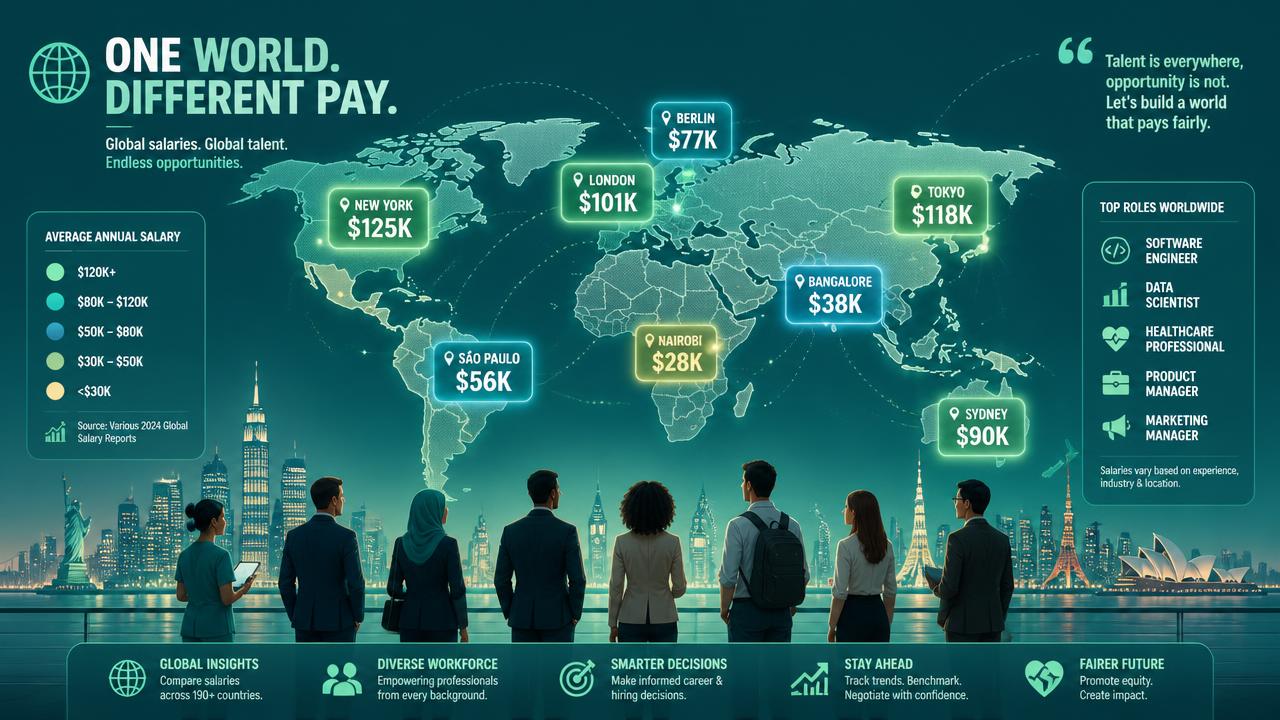
The same job can pay four times more in one market than another. Cost of living explains only part of it.
Productivity, not effort
A skilled machinist in a high-income economy earns several times what an equally skilled machinist earns elsewhere, doing comparable work. The difference is the capital, infrastructure and market surrounding the worker: better machines, larger customers and higher prices for the output. Wages track the value of what the worker's hour produces in that market, not the difficulty of the hour.
That is why the JobRank pyramid is published as a global benchmark in US dollars. It shows the relative ranking of professions that holds up across markets, while the absolute figures shift with where you stand.
Regulation and scarcity
Licensing is a wage machine. Wherever the law restricts who may perform work — medicine, law, aviation, electrical, gas, high-risk plant — the supply of workers is deliberately constrained and pay rises accordingly. Comparing two countries, the same occupation often pays far more in the one with a stricter licensing regime.
Unionisation, collective agreements and minimum award rates do similar work at the lower end of the pyramid, which is why base-level hospitality and retail pay varies enormously between otherwise similar economies.

Reading an international offer
Convert to purchasing power, not exchange rate. Then subtract the things your home market gives you free: healthcare, schooling, pension contributions and leave entitlements can be worth twenty per cent or more of salary. Finally, check the tax treatment and whether your qualification is recognised locally without bridging study, because an unrecognised credential turns a senior salary into a junior one overnight.